


Recycling is becoming more important as households, businesses, and cities generate larger amounts of waste every year. The traditional process of collecting and separating recyclable materials can be slow, complicated, and sometimes inaccurate. Plastic, paper, glass, metals, food packaging, and electronic waste often enter the same waste stream, making proper sorting difficult.
This is where concepts such as MataRecycler, smart recycling, artificial intelligence, automated sorting, and sustainable waste management become increasingly relevant.
MataRecycler is associated with recycling awareness, responsible waste disposal, sustainability, and better resource management. At the same time, modern recycling facilities around the world are increasingly using technologies such as artificial intelligence, computer vision, machine learning, robotics, and smart sensors to identify and separate recyclable materials more efficiently.
The combination of better recycling information and intelligent technology can help make waste management more organized, accurate, and environmentally responsible.
What Is MataRecycler?
MataRecycler is primarily associated with recycling information, waste reduction, sustainability, and environmentally responsible practices.
It provides a useful way to understand how modern recycling works and why better waste management is necessary for households, businesses, communities, and industries.
The central idea behind recycling platforms such as MataRecycler is simple: many materials that people throw away still have value.
Items such as:
- Plastic containers
- Glass bottles
- Aluminum cans
- Cardboard
- Paper
- Electronic components
- Metal products
- Reusable household materials
may be collected, processed, recovered, or reused instead of being sent directly to landfill.
However, recycling becomes much more effective when materials can be identified and separated correctly. This is where smart technologies are beginning to transform the recycling industry.
Why Modern Recycling Needs Smarter Technology
Recycling may appear straightforward from a consumer’s perspective. People separate waste, place recyclable materials in a bin, and expect those items to be recycled.
The reality is considerably more complex.
Mixed Materials Create Sorting Problems
A single recycling collection can contain dozens of different materials.
For example, one waste stream may include:
- PET plastic bottles
- Food containers
- Cardboard packaging
- Aluminum cans
- Glass
- Plastic films
- Labels
- Paper
- Non-recyclable products
These materials cannot always be processed together.
They often need to be separated before they can enter different recycling systems.
Read More: How AI Is Making Recycling Smarter and Easier
Contamination Reduces Recycling Quality
Contamination is another major recycling problem.
Food waste, liquids, non-recyclable plastics, or incorrect materials can enter recycling containers. When contamination becomes too high, otherwise useful recyclable materials may become difficult or expensive to process.
Smart sorting technologies can help recycling facilities detect unwanted materials earlier in the process.
Packaging Is Becoming More Complex
Modern packaging is available in countless shapes, materials, coatings, colors, and combinations.
Two packages may look almost identical but require completely different recycling processes.
Traditional sorting systems may struggle to recognize these differences consistently.
Artificial intelligence can provide an additional layer of material recognition.
How Artificial Intelligence Is Transforming Recycling
Artificial intelligence is helping modern recycling systems understand waste in ways that traditional machinery cannot.
AI-powered recycling technologies can analyze images, identify objects, classify materials, and support automated sorting decisions.
Instead of simply moving waste through mechanical equipment, smart recycling systems can attempt to understand what each object actually is.
AI Can Identify Recyclable Materials
Cameras can capture images of materials traveling along conveyor belts.
AI software analyzes those images and attempts to determine whether an object is:
- Plastic
- Paper
- Cardboard
- Metal
- Glass
- Packaging
- A contaminant
- Another recyclable category
Once the system has identified the material, automated equipment can help direct it toward the appropriate recycling stream.
This creates a faster and more intelligent sorting process.
Computer Vision Makes Recycling More Accurate
One of the most important technologies used in AI-powered recycling is computer vision.
Computer vision allows software to interpret images and recognize physical objects.
How Computer Vision Works in Recycling
A typical smart sorting process may work like this:
- Waste moves along a conveyor belt.
- Cameras capture images of the moving objects.
- AI software analyzes those images.
- The system identifies individual materials.
- Sorting equipment separates selected objects.
The process happens extremely quickly because recycling facilities may handle very large volumes of waste.
Recognizing Different Types of Objects
Computer vision can potentially recognize characteristics such as:
- Shape
- Size
- Color
- Packaging design
- Material appearance
- Product type
- Object position
Machine-learning models can then use these characteristics to classify objects more accurately.
Machine Learning Helps Recycling Systems Improve
Machine learning is another important part of smart recycling technology.
A machine-learning system is trained using large collections of examples.
For recycling, these examples may include thousands or millions of images showing different categories of waste.
Training AI to Understand Waste
During training, the system learns patterns.
For example, it may learn the visual differences between:
- Plastic bottles
- Beverage cans
- Cardboard
- Food packaging
- Glass containers
- Non-recyclable waste
After training, the system can analyze new objects and predict which category they belong to.
More Detailed Material Classification
Advanced AI systems may eventually classify materials much more precisely than simply labeling something as “plastic” or “metal.”
They may distinguish between:
- Different plastic types
- Packaging formats
- Colored and transparent materials
- Aluminum and steel
- Different paper grades
- Reusable and non-reusable materials
This level of classification can help create cleaner recycling streams.
Smart Sensors Improve Material Detection
Visual recognition alone cannot identify every type of material.
Some objects look similar even though they are made from completely different substances.
This is why smart recycling facilities may combine computer vision with additional sensor technologies.
Why Sensors Matter
Sensors can provide information about material characteristics that may not be visible to cameras.
This creates a more complete identification process.
A smart sorting system may combine several types of information before deciding where an object should go.
Better Identification Means Better Recovery
Improved identification helps recycling facilities recover valuable materials that might otherwise be lost.
When materials are separated properly, they can be processed into cleaner recycling streams and potentially sold or reused more effectively.
Robotics Automates the Sorting Process
Artificial intelligence can recognize materials, but another system is needed to physically move them.
This is where robotics becomes important.
AI and Robotics Work Together
Imagine a conveyor belt filled with mixed waste.
The AI system detects a recyclable bottle.
The software sends instructions to the sorting equipment.
A robotic arm can then pick up the bottle and move it into the correct recycling stream.
Other systems may use high-speed air jets or mechanical sorting equipment instead of robotic arms.
Benefits of Robotic Sorting
Robotic recycling systems can provide several advantages, including:
- Fast sorting
- Consistent operation
- High-volume processing
- Reduced repetitive manual work
- Improved recovery of selected materials
Human workers still remain important for monitoring, maintenance, safety, quality control, and complex decision-making.
How MataRecycler Connects With Smart Recycling
MataRecycler can be understood as part of the broader movement toward more informed and responsible recycling.
The concept becomes especially relevant when combined with technologies that make waste management easier to understand and more efficient to operate.
Recycling Education Matters
Smart recycling does not begin inside an industrial facility.
It begins with people understanding what should be reused, recycled, repaired, or disposed of responsibly.
Educational recycling information can help people make better decisions before waste even enters the collection system.
Technology Improves What Happens After Collection
Once recyclable materials enter a waste facility, intelligent machines can help identify and separate them.
Therefore, effective recycling increasingly depends on two important elements:
better information for people and better technology for recycling facilities.
How Smart Recycling Makes Recycling Easier
Smart recycling technology can simplify several stages of waste management.
Easier Material Identification
AI systems can automatically recognize many objects instead of depending entirely on manual inspection.
Faster Sorting
Automated systems can process large quantities of waste continuously.
Better Waste Data
Smart systems can record information about the materials passing through a facility.
Improved Recycling Quality
Better separation can create cleaner material streams.
Reduced Human Error
Automation can provide consistent classifications for repetitive tasks.
Together, these improvements can help modern recycling operations become more efficient.
Data Analytics Is Changing Waste Management
Artificial intelligence does more than identify individual objects.
Smart recycling systems can also collect valuable data.
Understanding Waste Streams
A facility may be able to measure:
- The amount of plastic received
- Common contamination types
- Material recovery rates
- Packaging categories
- Changes in waste composition
- Frequently discarded materials
This information can help recycling operators understand exactly what passes through their facilities.
Making Better Operational Decisions
Data can support decisions about:
- Equipment upgrades
- Sorting priorities
- Staffing
- Quality control
- Processing capacity
- Waste-reduction strategies
Instead of relying only on estimates, facilities can use detailed information to improve operations.
AI Recycling and the Circular Economy
Smart recycling also supports the concept of a circular economy.
In a traditional linear economy, products often follow this pattern:
Produce → Use → Discard
The circular economy aims to create a different model:
Produce → Use → Reuse → Recover → Recycle
The goal is to keep materials useful for as long as possible.
Recovering Valuable Resources
Waste can contain useful raw materials.
Metals, plastics, paper, glass, and electronic components can sometimes be recovered and returned to production systems.
Better sorting increases the likelihood that these materials can be successfully reused.
Reducing Dependence on New Raw Materials
When recycled materials can be recovered effectively, manufacturers may reduce their reliance on newly extracted resources.
This can support broader sustainability goals.
Environmental Benefits of Smarter Recycling
Artificial intelligence alone cannot solve every environmental problem, but smart recycling can contribute to more sustainable waste management.
Less Material Sent to Landfills
Better sorting can help recover recyclable materials that might otherwise be discarded.
Improved Resource Recovery
Accurate classification can improve the quality of recovered materials.
Greater Recycling Efficiency
Automated systems can process waste faster and more consistently.
Better Environmental Awareness
Platforms focused on recycling education can help consumers understand the environmental consequences of poor waste disposal.
Smart Recycling for Businesses
Businesses can also benefit from intelligent waste management.
Companies produce large amounts of:
- Packaging
- Cardboard
- Plastic
- Office paper
- Electronics
- Manufacturing waste
- Food-related waste
Better recycling systems can help businesses understand what materials they generate and how those materials can be managed responsibly.
Waste Data Can Support Sustainability Goals
Companies increasingly track environmental performance.
Smart recycling data can potentially help organizations measure waste generation, recycling rates, contamination levels, and resource recovery.
This information may support internal sustainability programs.
Smart Recycling in Cities
Cities face even larger waste-management challenges because millions of people can generate enormous amounts of waste.
Traditional collection systems may provide only limited information about what residents actually throw away.
Smart technology can help municipalities understand waste patterns more clearly.
Potential Smart-City Applications
Future waste systems may include:
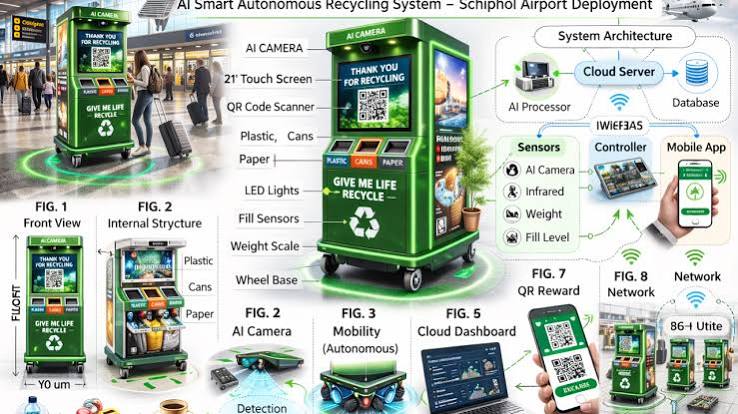
- Smart recycling bins
- Fill-level sensors
- AI sorting facilities
- Digital waste tracking
- Optimized collection routes
- Recycling education platforms
Together, these technologies could make urban waste management more efficient.
Can AI Completely Replace Human Recycling Workers?
AI is unlikely to eliminate the need for human expertise across the recycling industry.
Instead, artificial intelligence can support people by automating repetitive or high-volume tasks.
Human workers remain important for:
- Equipment maintenance
- System monitoring
- Safety
- Quality control
- Facility management
- Complex sorting decisions
- Technical repairs
The most effective recycling facilities are likely to combine human expertise with automated technology.
Challenges of AI-Powered Recycling
Although smart recycling technology offers many advantages, it also comes with limitations.
High Installation Costs
Robotics, cameras, sensors, and AI systems require significant investment.
Maintenance Requirements
Advanced equipment needs regular maintenance and technical expertise.
Complex Waste Streams
Damaged, dirty, crushed, or overlapping materials can make identification difficult.
Different Local Recycling Rules
Recycling requirements vary between cities, countries, and facilities.
A material accepted in one location may not be accepted in another.
AI Is Not a Complete Waste Solution
Technology cannot replace responsible consumption.
Reducing unnecessary waste remains one of the most effective environmental strategies.
How Consumers Can Support Smarter Recycling
Consumers remain an important part of the recycling process.
Even the most advanced recycling technology works better when people dispose of materials responsibly.
Check Local Recycling Rules
Always verify which materials your local recycling program accepts.
Keep Recyclables Clean
Empty food and liquids from containers when local rules require it.
Avoid Mixing Incorrect Materials
Do not automatically assume every plastic or packaging product can be recycled.
Reuse Before Recycling
If an item can be reused or repaired, that may sometimes be better than immediately recycling it.
Reduce Unnecessary Waste
Buying durable products and avoiding unnecessary packaging can reduce waste before recycling becomes necessary.
What Is the Future of AI in Recycling?
The future of recycling is likely to become increasingly automated, connected, and data-driven.
AI models will continue improving as they receive more training data.
Computer vision may become better at recognizing complicated packaging.
Robotics may become faster and more flexible.
Sensors may become more accurate.
Recycling facilities may gain increasingly detailed information about the materials they process.
Smarter Material Recovery Facilities
Future recycling facilities could use AI throughout the entire sorting process.
Different technologies may work together to identify, classify, separate, and monitor waste.
Better Product Design
Recycling data could also help manufacturers understand which packaging designs are difficult to process.
Companies may then create products that are easier to reuse or recycle.
More Connected Recycling Systems
Waste-management data could eventually connect consumers, businesses, recyclers, manufacturers, and local governments.
This could support a more efficient circular economy.
Why MataRecycler Is Relevant to the Future of Recycling
MataRecycler reflects the growing interest in sustainable waste management and responsible recycling.
Its relevance is not simply about technology.
The larger value comes from encouraging people to understand how recycling works and why responsible material management matters.
AI can make industrial recycling smarter, but people still need clear information.
Recycling facilities need effective technology.
Manufacturers need better product design.
Governments need suitable recycling infrastructure.
Consumers need to make responsible decisions.
When these elements work together, recycling can become much more effective.
Final Thoughts
MataRecycler represents an important topic within the wider discussion surrounding recycling, sustainability, waste management, and intelligent technology.
Modern recycling is no longer limited to basic bins and manual sorting. Artificial intelligence, computer vision, machine learning, smart sensors, data analytics, and robotics are helping recycling facilities understand waste streams in much greater detail.
These technologies can support faster sorting, better material recognition, improved recycling quality, more useful waste data, and higher resource recovery.
However, technology should not be treated as a replacement for responsible behavior.
The most sustainable approach combines waste reduction, reuse, recycling education, better product design, modern recycling infrastructure, and intelligent sorting technology.
As AI continues to develop, recycling facilities are likely to become smarter and more automated. Platforms and resources focused on recycling awareness can help people understand these changes and make better environmental decisions.
Ultimately, smarter recycling is about more than separating waste.
It is about recognizing that discarded materials often still have value and creating better systems to recover that value before useful resources are permanently lost.
Frequently Asked Questions About MataRecycler
What Is MataRecycler?
MataRecycler is associated with recycling, sustainability, waste reduction, responsible disposal, and environmental information. It helps explain topics connected with modern recycling and waste management.
Does MataRecycler Use Artificial Intelligence?
MataRecycler itself is better understood as a recycling and sustainability information resource. Artificial intelligence is discussed in connection with the wider smart recycling industry, where AI is used for material recognition, automated sorting, and waste analysis.
What Is AI Recycling?
AI recycling refers to the use of artificial intelligence technologies to identify, classify, monitor, and sometimes automatically separate waste materials during the recycling process.
How Does AI Identify Recyclable Materials?
AI systems can use cameras, computer vision, machine-learning models, and sensors to analyze objects and determine what type of material they are likely to contain.
What Are the Main Benefits of Smart Recycling?
Smart recycling can improve material recognition, sorting speed, data collection, resource recovery, and operational efficiency.
Can Artificial Intelligence Reduce Recycling Contamination?
AI can help recycling facilities detect certain incorrect or unwanted materials. However, responsible consumer sorting and effective local recycling programs remain important.
Is Smart Recycling Better for the Environment?
Smart recycling can support environmental sustainability by helping facilities recover useful materials more efficiently and reducing unnecessary waste disposal.
What Is the Future of Recycling Technology?
Future recycling systems are expected to use more artificial intelligence, robotics, computer vision, smart sensors, automation, and data analytics to improve waste identification and material recovery.
